This is an old revision of the document!
Table of Contents
Map of Extensions
Section 8: Serpent and the Fire Contains 49 separate entries Pages: 529-582
Pictures/Art as Poetry
This section features many unique types of poetry to look at. Many of which are not traditional type poems. Writer Martín Gómez Ramírez’s work Cicada, found on page 530, is originally written in Mayan hieroglyphs. In fact, he is believed to be the first modern writer to do this. Rothenburg provides us with a translation of what the glyphs are saying, but it's interesting that you can’t read this poetry in a traditional sense. There are others featured in the section that are more pictures than actual words to read; for example, the Shaker Vision Drawing on page 531.
Experimental Poems
Edgar Allan Poe - Excerpt from x-ing a paragrab
Here is the version I found on eapoe.org; the Baltimore Poe Society's website: “So ho, John! how now? Told you so, you know. Don’t crow, another time, before you’re out of the woods! Does your mother know you’re out? Oh, no, no! — so go home at once, now, John, to your odious old woods of Concord! Go home to your woods, old owl, — go! You wont? Oh, poh, poh, John, don’t do so! You’ve got to go, you know! So go at once, and don’t go slow; for nobody owns you here, you know. Oh, John, John, if you don’t go you’re no homo — no! You’re only a fowl, an owl; a cow, a sow; a doll, a poll; a poor, old, good-for-nothing-to-nobody, log, dog, hog, or frog, come out of a Concord bog. Cool, now — cool! Do be cool, you fool! None of your crowing, old cock! Don’t frown so — don’t! Don’t hollo, nor howl, nor growl, nor bow-wow-wow! Good Lord, John, how you do look! Told you so, you know — but stop rolling your goose of an old poll about so, and go and drown your sorrows in a bowl!”
Now the one Rothenberg gives us has the letter x replace all the Os in the paragraph.
This story is about two warring newspapers fighting with each other. One editor gets the idea to steal the type O from his competitor and said competitor just uses his X in place of the missing O. However, readers will notice that Rothenberg didn’t give any footnotes for this piece, he just moves right along and without any context to what is going on it seems as if Poe has gone mad. But it also gives Rothenberg the chance to include this piece in this section as it fits in quite nicely with all the other misfits.
This isn’t the only excerpt from stories and books Rothenberg includes. Take for example the work of Guillermo Cabrera Infante, a Cuban writer whose work Three Trapped Tigers was known to be a: “multilayered and experimental novel” (page 537).
Sky Poetry
Rothenberg also included poems we can no longer see, in the sense, that they were sky poems. Both David Antin and Raúl Zurita conducted sky poems, which basically means that they worked with pilots who could sky write to put their poems in the sky. Antin’s read:
IF WE GET IT TOGETHER
CAN THEY TAKE IT APART
OR ONLY IF WE LET THEM
While Zurita’s read:
MY GOD IS HUNGER
MY GOD IS SNOW
MY GOD IS EMPTINESS
MY GOD IS PAIN
MY GOD IS NO
etc.
But sky poems weren't the only thing Zurita did, he also bulldozed “Ni Pena Ni Miedo”, which translates into “Neither Pity Nor Fear” into the sand on Atacama Desert, which was only visible from the sky.
To experience poetry on this scale would’ve been amazing, and probably was when it occurred. It really highlights that literature knows no bounds.
Sound Poetry
Sound Poetry → Can be either a form of literary or musical composition. Where the performer takes the more phonetic aspects of language and foregrounds them, pushing aside the conventional way of speaking. This type of poem was meant to be performed in front of an audience, to be heard; not really to be read. And it makes for an interesting sight on the page when Rothenberg puts them in this section. Under this category one can group Jazz and Blues Music under this title, which Rothenberg seemingly does as he puts That Da-Da Strain lyrics on page 547. These were written by Mamie Medina and I even managed to find sheet music for it and a performance.
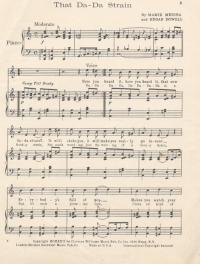
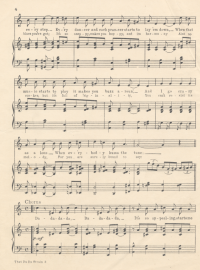
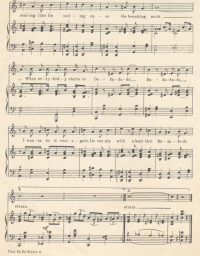
Here's a link to the song on Youtube: Da Da Strain
Of course, out of all of the sound poetry Rothenberg also included other singers like Ella Fitzgerald and her scat version of Lady Be Good. Sound Poetry is fun to read and even more fun to figure out how the rhythm and beat are supposed to go.
Asemic Poetry
Asemic Writing → A wordless writing system that uses lines and symbols to create a visual narrative.
Asemic → without meaning
Rothenberg includes a piece from Emily Dickenson titled Asemic Writing and Rothenberg gives readers this delightful thought in the footnotes: “My point is without words, asemic writing is able to relate to all words, colors, and even music, irrespective of the author’s or the reader’s original languages…” It’s almost worth considering that as unreadable as this type of writing is, it is the only type of writing that can transcend borders and truly be international.
Other Poems
Rothenberg gives us poems that highlight the failures of language, poems that are only a line, poems that mess with language and poems that decide to throw all comma rules out the window. It is playful and fun, and makes readers think outside of the box, throwing them off when their expectations are shattered. Such poems include messing around with format or capitalization, even bolding or italicizing words. Putting big spaces between letters or words, or even just one word, Rothenberg tries to throw everything into this section, from lists with Walt Whitman to directions from Dutty Boukman. Two pieces that completely stand out on their own are pages 566 and 567 respectively, where we have a poetic labyrinth from the 17th century that I still can’t personally understand, and an Intermedia Chart that makes my head hurt.
Conclusion
I believe that this section; titled Map of Extensions, is truly an extension into the wide world of poetry. To follow along with the term omnipoetics, Rothenberg does, indeed, try to encompass ALL types of poetry. To do this he collected the most unique types into this one section, as many as he could fit, to create what I would argue is a modpodge of poetry misfits. You wouldn’t find these in a standard classroom nor on a standardized test. They aren’t formal, in anything they are informal, and they don’t fit with stereotypes, therefore they are misfits.


