Table of Contents
Editing Guide
We may use this space to document process decisions or simply track style-guide decisions.
For Discussion
- Is there a usefulness and desire to create a more regular structure of “sub-sections” to our wiki entries?
- See Sherwood's example as a possibile guide Law of the Rights of Mother
- Template from example above entry-template
- Should we rename and/or reclassify entries so that information and “commentary” (essay-like) entries are distinguished? Option (flat the section of an entry that is more interpretive as “commentary”
You can make other suggestions here or in the “Discussion” are at the bottom of the page.
Entry Editing Process
- Begin by discussing and making desired edits to entry structure
- Pay attention to headings and subheadings
- Use the edit guide below
- Name a “subsection” if there are more than two paragraphs on the sub-topic.
- Work on cross-references (using tags but also links to other entries of relevance
- Update or complete list of Works Cited and/or Additional References
- Copy edit for clarity, grammar, puncuation, and consistency.
I. Review Tags
We may decide to generate a controlled vocabulary content tags that would serve to create cross references or links to other pages in the wiki. Consider what might be useful-tags for the pages you have recently worked on.
II. Apply Standard Heading and Structural Formatting
Basic Formatting
1. At the top of each page, give the title a heading level of one
====== Title of Page ======
2. Use succinct level 2 headlines to categorize major sections. exs.
==== Context =====
==== Language =====
==== Genre ====
Bullets and Numbered Lists
Succint points can be in lists when it helps clarity
**3. Endnotes for quoted/paraphrased sources - Additional References Listed at bottom **
Include links when possible. Include the most complete publication information available, for sources referenced and quoted.
This code
((Rothenberg, Symposium of the Whole, 246))
will embed a link to the full information and list it at the bottom of the page.1)
Distinguish sources that are referenced and listed at the end as “Works Cited.”
“Additional References” should come at the end, listing a source not referenced.
III. Images
- When using images, please look for Public Domain or Creative Commons available documents.
- Upload only images less than 500K; smaller is preferable. Resize your found image if necessary.
- Use the “Caption” element to provide a descriptive name for accessibility; add brief source information; see below.
{{robert_johnson.png?250|Robert Johnson - Fair Use from https://en.wikipedia.org/wiki/File:Robert_Johnson.png}}
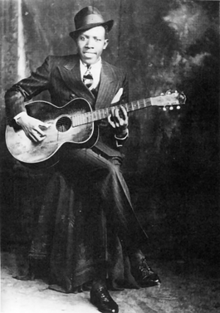
=
IV. Quotations - Block quote
Long quotes and poem quotes can be visually flagged with special markup.
Here is a block quote:
This is a long quote.This is a long quote.This is a long quote.This is a long quote.This is a long quote.This is a long quote.This is a long quote.This is a long quote.This is a long quote.This is a long quote.This is a long quote.This is a long quote.This is a long quote.This is a long quote.This is a long quote.This is a long quote.This is a long quote.This is a long quote.This is a long quote.This is a long quote.This is a long quote.This is a long quote.This is a long quote.This is a long quote.This is a long quote.This is a long quote.This is a long quote.This is a long quote.
Here is a few lines from a poem within a block quote:
This is a line
from a poem
and it respects
the line breaks
when you put in the
special
tags
like
so
<blockquote>

<poem>

Text Here
</poem>
</blockquote>


