This is an old revision of the document!
Table of Contents
Sale of Souls by Adah Isaacs Menken (p.195)
Author
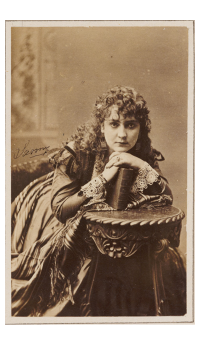 Adah Isaacs Menken, born in 1835, was an American actress, poet, and painter renowned for her daring and nonconfomist persona. She gained fame for her provocative stage performances, most notably in “Mazeppa,” in which she rode a horse nearly naked. Her postumous poetry collection, Infelicia, where the poem Sale of Souls belongs, dealt with emotional and psychological challenges, demonstrating her fragility and enthusiasm. Along with her artistic aspirations, Adah Isaacs Menken had a difficult personal life, including many marriages and the loss of her two children. She died in 1868 at the age of 33.
The Context behind Sale of Souls
/.
Thoughts about the poem
The shipwrecked: Dealing with traumas and destruction of the previous self. Reconstruction of her identity and empowerment.
The marble tower city: How men are drowned into their ambitions. Patriarchal society being enslaved by their own desires in a rushing and restless destiny.
The loss of Eros: Having Eros as a representation of women's sexuality and freedom, the death of Eros implies the patriarchal control over women's behavior and voice. the awakening of the god of ambition could represent women taking this power back.
The plea at the end of the poem may express the poet's desire to see this happening before her times comes to an end.
Excerpts
I
“Oh, I am wild—wild!”
“Angels of the weary-hearted, come to thy child. Spread your white wings over me!”
Comments:suferring. Needs saving. Where is she?
II
“Souls for gold!” Comments: men driven by ambition?
Antithesis: mist and gloom, hate and love, peace and strife, wrong and right, life and death
“The hoarse voice of the world echoes up the cold gray sullen river of life. No silence until it shall have reached the solemn sea of God's for ever”; Comments: the use of river, and sea, later waves and ocean: what does water mean for her?
III
“The hollow echoes that the iron-shod feet of the years throw back on the sea of change still vibrate through the grave-yard of prayers and tears;— Prayers that fell unanswered, Tears that followed hopelessly.” Comments: Do iron-shod feet represent men's power? Is it an allegory to war?
“But pale Memory comes back through woe and shame and strife, bearing on her dark wings their buried voices” Comments: Why was Memory spelled with M in capital letter?
IV
“Poor Heart, what do the waves say to thee?” “bound me to woman-life by the sweet love of my Eros, and the voice of one who made music to call me mother”. Comments:
“Sad Heart, what do the hills say to thee? They speak of my Eros, and how happily in the dim discolored hours we dreamed away the glad light, and watched the gray robes of night as she came through the valley, and ascended on her way to the clouds. Comments: women's empowerment?
V
“The wild cry awoke the god of ambition, that slumbered in the bosom of Eros”;
Weeping and fearing, haggard and barefoot, I clung to him with my fainting child.
The tramp of hoofs on the iron streets, and the cries of the drowning,
and the curses of the damned were all heard in that Babel, Comments: The expression “tramp of hoofs” was first used in the poem “Rain in Summer” (1866) by Henry Wadsworth Longfellow. Intertextuality?
VI
Oh leave me not on the wreck of this dark-bosomed ship while Eros lies pale on the rocks of the world. Oh how many years must roll their slow length along my life, ere the land be in sight! When will the morning dawn? When will the clouds be light? When will the storm be hushed? It is so dark and cold. Comments: hoping for the day women will not be under a patriarchal's control anymore.
Poem's Structure
Free Verse
Menken’s poem does not follow a strict rhyme scheme or, making it a free verse composition. This lack of formal structure allows for a more organic, emotional, and fluid expression of the speaker’s distress. The poem’s rhythm shifts between moments of frantic energy (“Oh, I am wild—wild!”) and slower, reflective lines (“When will the morning dawn?”), mimicking the speaker’s emotional turmoil.
Use of Sections (Roman Numerals)
The poem is divided into sections marked by Roman numerals, suggesting a thematic and emotional progression. Each section presents a different aspect of suffering, moral decay, or reflection:
Section I – A desperate plea for salvation (“Angels of the weary-hearted, come to thy child”). Section II – Condemnation of materialism and human ambition (“Souls for gold! Who’ll buy?”). Section III – Allegory of history’s oppression (“The hollow echoes that the iron-shod feet of the years throw back”). Section IV – Reflections on love, motherhood, and memory (“They speak of my Eros”). Section V – Chaotic imagery of destruction, referencing Babel (“The tramp of hoofs on the iron streets”). Section VI – A longing for liberation (“When will the storm be hushed?”). This structured progression creates a narrative arc, leading from despair to critique, and ultimately to a hopeful yet unresolved yearning for change.
References
/.


