This is an old revision of the document!
Table of Contents
How the Names Are Changed on the Peyote Journey by Ramón Medina Silva
Symposium of the Whole (pp. 116-118)
Originally published in Peyote Hunt: The Sacred Journey of the Huichol Indians by Barbara Myerhoff (1972).
What is Peyote?
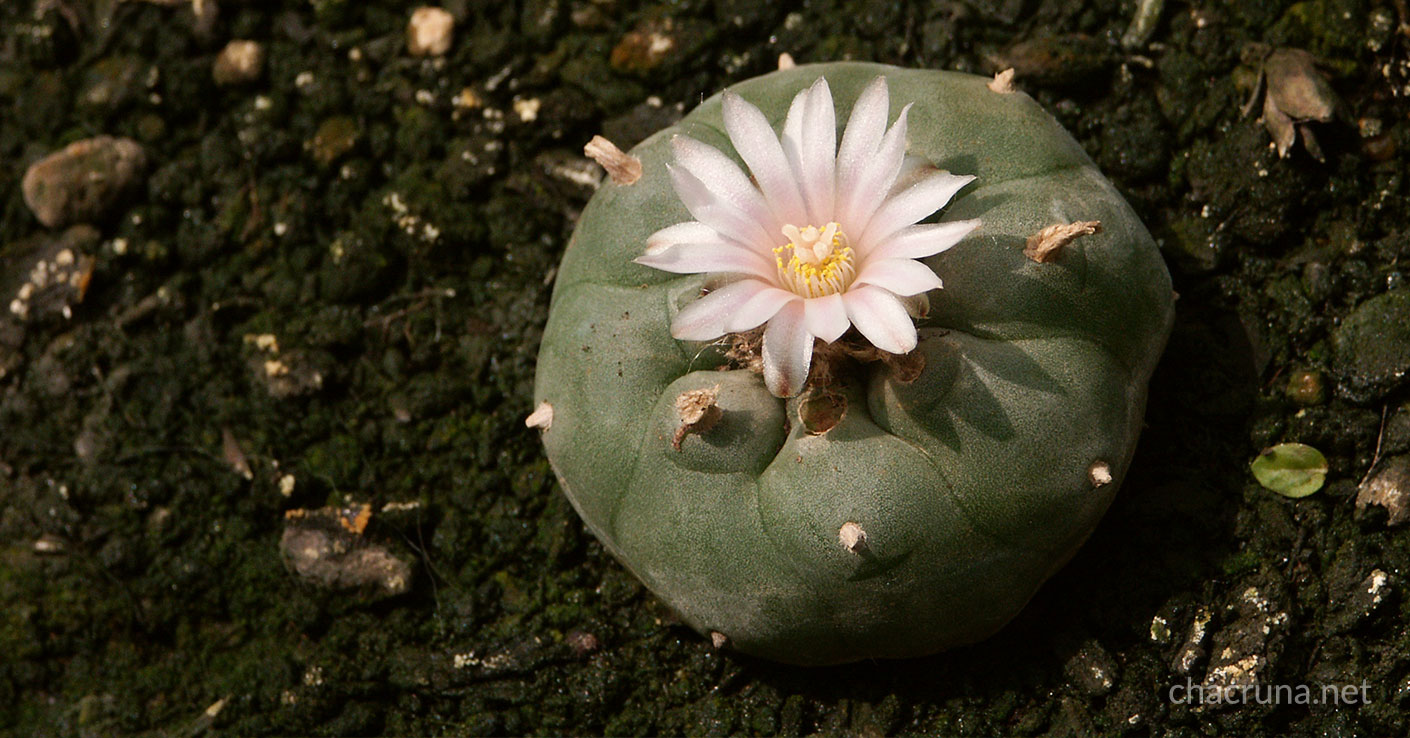 Peyote is a small cactus that contains psychoactive alkaloids, mescaline in particular, which induces similar hallucinogenic effects as psilocybin and LSD. It is native, and considered sacred, in Mexico and southwestern Texas. The Spanish word's roots can be traced to “Nahuatl peyōtl, meaning 'caterpillar cocoon', from a root peyōni, 'to glisten'.” It is known for its mind-altering capabilities and has a long history (5,500 years) of psychedelic and medicinal uses by indigenous people in North America.
Who is Ramón Medina Silva?
Language Reversal & Defamiliarization
.
The Role of Community
The language changes are neither random nor individual. The mara'akáme (shaman) tells the rest of the group what to call things. This leader not only establishes the vocabulary changes, but teaches and reinforces them.
Cyclical Time
There is a juxtaposition between the time spent in the peyote experience (outside of normal time, fresh, unique, short lasting) and the repeated reminders by the author that this process comes down from the beginning.
References
- .
- .


